

Why Is Polyester Used In Activewear At All?
Walk into any gym and read the labels. Almost everything you see will be polyester.
There is a reason for that. It isn't the one they give you.
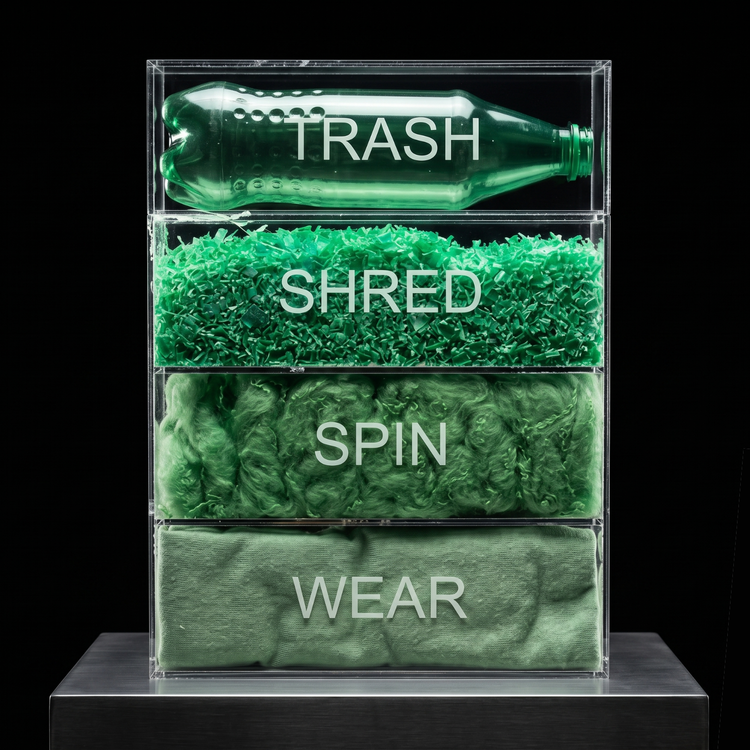
The answer is two dollars a metre.
Polyester is now 59% of all fibre made worldwide, around 78 million tonnes a year, and 88% of it comes from fossil fuels.
That is not a verdict on performance. It is a verdict on cost. A brand choosing between polyester and merino is not weighing up what sits better against your skin. It is weighing up margin per unit, and plastic wins that argument every time.
Nobody involved was thinking about squat depth. They were thinking about a fabric that did not wrinkle.
Polyester was never made for athletes.
It was patented in 1941 by two British chemists, Whinfield and Dickson, working at the Calico Printers' Association in Lancashire. It was sold as Terylene in Britain and Dacron in America, and it reached consumers in the early 1950s as a fabric that saved women ironing.
Sportswear picked it up decades later. Not because someone tested it against wool and found it better. Because it was cheap, it was consistent, and there was an ocean of it.

What the industry sells you as performance.
You will have read that polyester is quick-drying, colourfast and stretchy. Look at what each of those actually means.
Quick-drying means the fibre refuses to absorb anything. Sweat has nowhere to go, so it sits on your skin and the fabric dries around it. Merino takes moisture into the fibre core and releases it as vapour. One moves the problem. The other deals with it.
Colourfast means the fibre is chemically inert and will not hold dye without heavy processing, high heat, pressure and a stack of auxiliary chemicals. The colour range is a consequence of that chemistry, not a benefit of the fabric.
Stretchy means it is not. Polyester has almost no natural recovery, so elastane gets blended in to compensate. That is a second plastic added to fix the first one.
And here is what it costs you.
It traps heat
Polyester pushes sweat to the surface and holds the warmth against your skin underneath. In a hot gym that is the wrong way round, and it matters most in the places you least want it.
It holds smell
The stink is bacterial. In controlled testing, a trained odour panel rated polyester significantly worse than cotton after identical exercise, and odour-causing micrococci grew preferentially on the synthetic. Washing never fully clears it.
It sheds plastic
A single 6 kg wash of synthetic clothing can release more than 700,000 microfibres. Later work found synthetics shed while you simply wear them. Natural fibres don't. Full stop.
It carries chemistry you didn't choose
Antimony trioxide is the catalyst used to make most polyester, present in 80 to 85% of virgin PET. Lab testing found 125 to 470 µg/g in finished fabric, a fraction of which migrated into artificial sweat.

It ends up where you would rather it didn't.
A 2024 study published in Toxicological Sciences found microplastics in every one of the 23 human testicular samples tested. Polyethylene was the most common polymer. PET, the plastic in polyester, was among the most prevalent.
We go through the research on hormones and synthetic fabric in detail on our page about polyester and testosterone.
They know all of this.
Every product developer at every major sportswear brand could recite it back to you. They compete on stretch and colourways because those are the arguments plastic can win. They do not compete on what the fabric is doing to your skin across ten years, because that is a competition they lose.
The silence is not an accident. It is a business decision.
What you wear instead.
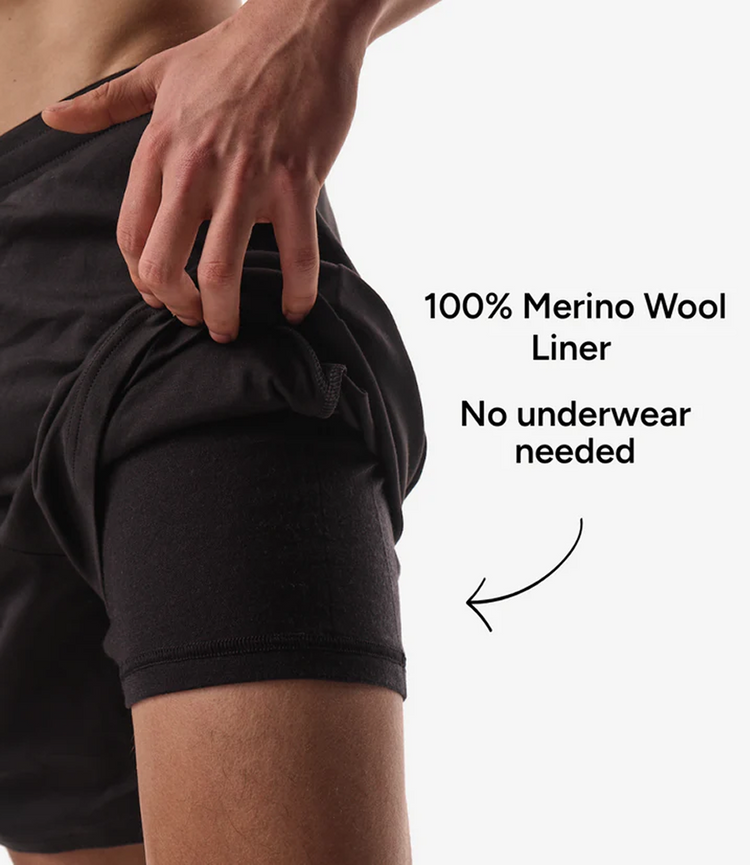
Merino regulates temperature in both directions rather than trapping heat in one. It absorbs moisture into the fibre and evaporates it. It resists odour naturally, so it can be worn back to back before washing. Organic cotton handles the outside, breathable and built to age well.
Nero shorts use a 100% GOTS organic cotton shell and a 100% merino wool liner. No polyester. No nylon. No elastane.
It costs more to make. That is the entire reason nobody else does it.
The short version
Polyester is in your gym shorts because it costs about two dollars a metre and merino costs many times that. Everything else you have been told about it is a story built backwards from that number.
You are not wearing the best fabric available. You are wearing the cheapest one that clears the bar.