


By Tyler Ball · Last updated 18 October 2026
Every activewear brand makes the same three promises. Breathable. Moisture-wicking. Anti-odour. Almost none of them tell you how.
Merino doesn't need the adjectives. The benefits of merino wool come from the structure of the fibre itself, and they have been measured on hot plates, on manikins and on people. Here is what it does, and how we know.
Merino works because the fibre is built in two layers.

A merino fibre has a water-repellent outer skin of overlapping scales and a core that draws water vapour in. Liquid beads on the surface. Vapour, which is what sweat is before it pools on you, passes through and binds inside the fibre.
That's the mechanism behind every claim on this page. As you warm up, merino absorbs sweat vapour into the core of the fibre before it condenses on your skin, then evaporates it from the outside. In saturated air, wool takes up about a third of its own weight in water vapour.
Taking up water also releases heat. Wool gives off a little warmth as it absorbs moisture and draws heat back as it dries, which evens out the swings that come with stopping and starting. On a dynamic hot plate, wool released more than twice the heat of polyester as the humidity rose, in a study funded by the wool industry. That's what temperature-regulating means when it's true.
How much moisture the fibre itself holds, % of dry weight
Commercial moisture regain reference values. Cotton varies from 7.0 to 8.5% by type. Source: ASTM D1909.
Polyester doesn't dry fast. It refuses to absorb, so the sweat stays on you.
Three studies put merino to the test.
Reference tables tell you what a fibre can hold. These three show what it does under conditions closer to the way you use it: changing humidity, real exercise and real skin.
Study 01 · 2023
Polymer Testing
Wool buffered heat 96% better than polyester as the humidity changed.
A thermal manikin wore merino, viscose, cotton and polyester while the air around it moved between 35% and 80% humidity. Wool’s buffering efficiency was 26% higher than viscose, 45% higher than cotton and 96% higher than polyester. The work was sponsored by the wool industry.
Study 02 · 1992
Textile Research Journal
Wool soaked up more sweat than polyester during exercise.
People rested, then exercised, in wool and polyester while the humidity under the fabric was measured. Wool absorbed considerably more sweat and cut the moisture building up on the skin. The effect was strongest in dry air at light to moderate effort.
Study 03 · 2019
Dermatitis
Superfine merino improved eczema scores against everyday clothing.
Fifty people aged five and up with mild to moderate eczema wore 17.5 micron merino or their usual clothes for six weeks each. Eczema severity and quality of life both improved in the merino. Participants weren’t blinded, and the trial was funded by Australian Wool Innovation. A 2017 trial in 39 young children pointed the same way.
Merino holds odour inside the fibre instead of on the surface.
Fibre type decides how much a fabric smells. In fabrics worn against the armpit, polyester scored high for odour intensity and wool came in mid to low, and the gap had nothing to do with how many bacteria were on the fabric. A later study tracked the odour compounds themselves: wool took them up and held on to them, while polyester kept releasing them.
In shirts worn through a fitness class, a trained panel rated polyester significantly worse smelling than cotton, and odour-linked micrococci grew on the polyester.
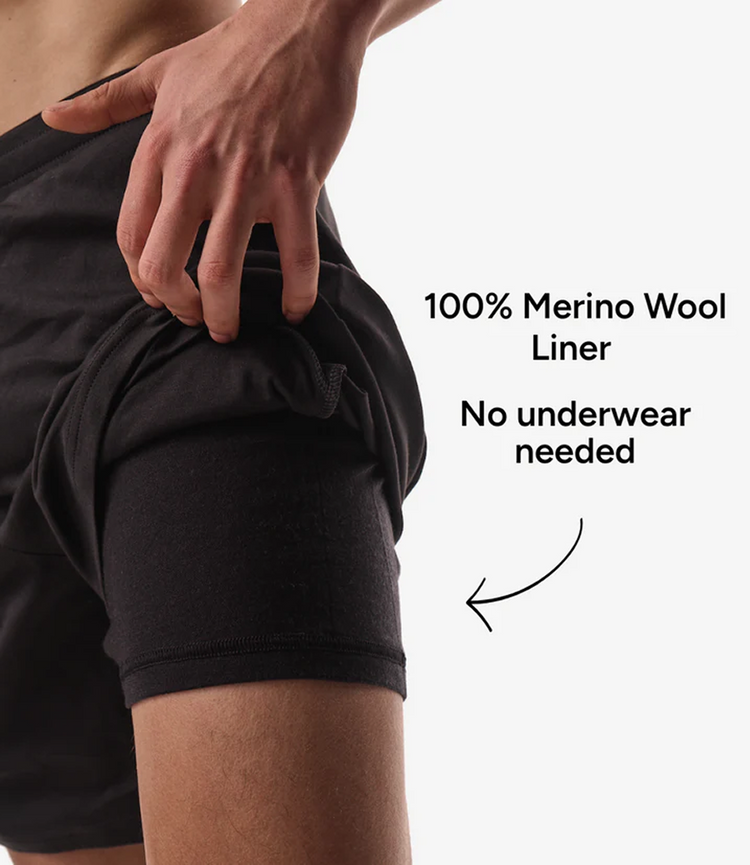
Merino doesn't kill the bacteria on your skin. It absorbs the odour compounds your sweat produces and holds them inside the fibre, which is why our merino liner shorts resist odour naturally and an airing between wears does most of the work.
Itch comes from thick fibres, and ours sit well under the line.
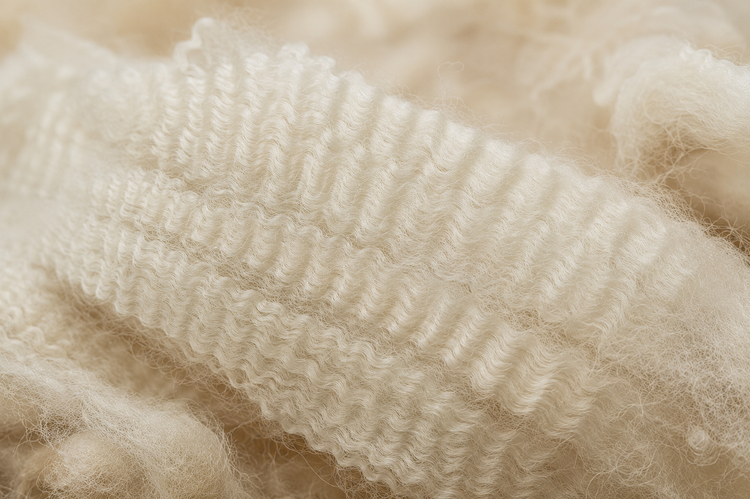
The prickle people blame on wool isn’t an allergy. It’s nerve endings in your skin reacting to stiff fibre ends that press in instead of bending, and fibres thicker than about 30 microns are the ones stiff enough to do it.
Our liner is spun from 17.5 micron merino, and our base layers and skullcap from 18.5 micron. A human hair is typically 60 to 90 microns, so the fibre against you is a fraction of that.
The scratchy jumper you remember was coarse wool. This is a different fibre.
Merino and polyester do opposite things with the same sweat.
| Merino | Polyester | |
|---|---|---|
| Moisture regain | 13.6% | 0.4% |
| Sweat vapour | Absorbed into the fibre, evaporated | Left on your skin or spread across the surface |
| Heat | Buffers it as moisture comes and goes | No buffer, it takes up almost no moisture |
| Odour | Held inside the fibre | Builds up on the fibre |
| In seawater | Biodegraded readily in 90 days | Virtually no breakdown |
| Shedding | No plastic to shed | Microplastics, every wash |
The verdict is written into the fibre.
Every study on this page points the same way. Merino absorbs sweat vapour, releases it, buffers heat and holds odour inside the fibre. Polyester does none of that, because it can't. It ended up in training kit because it costs about two dollars a metre, not because of anything it does against your skin.
We chose the fibre that does the work, then had it spun at 17.5 micron.
Test them out for 99 days

We're so confident you'll love Nero that we offer a 99-Day Money-Back Guarantee. No questions asked. Try them risk-free and feel the difference immediately. Say goodbye to sweaty plastic shorts forever.
Shop Nero ShortsWhat they say after training in them
★★★★★Buying more soon
I never noticed how restrictive and uncomfortable polyester was until I tried Nero, and I only have one pair and sometimes I'm forced to wear my polyester gym shorts again and it's actually horrible lol.
Comfy and practical
These are some of the best shorts i’ve ever worn! Comfy, good pocket size, sits well on the booty!
the merino on skin is really cosy, while the cotton outer always looks good!
Finally found a pair of shorts that are good for me and the earth!
Great shorts
These shorts fit and look great. The materials are excellent. Will definitely buy more going forward.
Every claim on this page has a source.
Read them yourself. Where a study was paid for by the wool industry, we've said so.