

Why Is Nylon Bad For You?
Nylon was the first synthetic fibre ever made. It was announced in 1938 as a replacement for silk, and within two years it was in parachutes.
It is in your gym shorts now for the same reason it was in parachutes. It is cheap, it is strong, and nobody is asking what it does to the skin underneath.
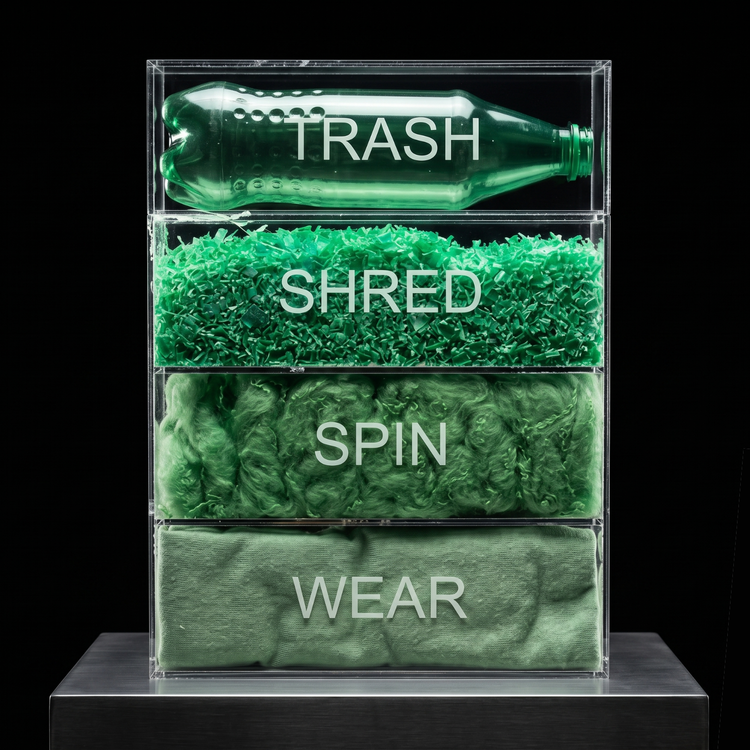
Nylon is a plastic with a nicer name.
The label says nylon or polyamide. What it means is a polymer made from petroleum, spun into filament and knitted into the thing pressed against you for an hour at a time.
Polyester at least gets called out. Nylon slips past because most men checking a composition tag are looking for one word, and this is the other one.
It was designed to stop a falling man. Nobody designed it to sit against his skin for ten years.
What the label sells you, and what it means.
Durable means dense and non-porous. The fibre does not let air through and it does not let moisture in. Strength is a property of the polymer, not a benefit to the man wearing it in July.
Quick-drying means it cannot absorb. Sweat has nowhere to go, so it sits on your skin while the fabric dries around it. Merino takes moisture into the fibre core and releases it as vapour.
Lightweight means thin plastic. It sheds the same as thick plastic. A single 6 kg wash of synthetic clothing can release more than 700,000 microfibres, and later work found synthetics shed while you simply wear them.
Four things it does to you.
It holds heat where you want it least
Nylon is dense and non-porous. It moves sweat to the surface and keeps the warmth trapped underneath. In a liner, that is the part pressed hardest against you for the whole session.
It smells, and washing does not fix it
The stink is bacterial. In controlled testing, a trained odour panel rated synthetic fabric significantly worse than natural after identical exercise. Odour-causing bacteria cling to the fibre surface.
It sheds into you and into the water
Microplastics have been found in every human testicular sample tested in a 2024 study, in human blood, and in lung tissue. Natural fibres don't shed plastic. Full stop.
It carries chemistry you did not choose
Synthetic fibres are finished with dyes, softeners and coatings. Lab testing on skin-contact textiles found trace elements migrating into artificial sweat under standard conditions. You sweat on it for an hour a day.

It is in the part nobody advertises.
Brands lead with the shell fabric because that is the number that flatters them. The liner, the waistband, the binding and the pocket bags get listed in small print or not at all.
Those are the parts held against your skin for the entire session. If a brand will not tell you what the liner is made of, you already know.
We go through the research on synthetic fabric and hormones on our page about polyester and testosterone.
Nylon is there because it is cheap.
Not because someone tested it against wool and found it better. Because it costs a fraction of what natural fibre costs, it takes a tight weave, and it goes in the parts of a garment nobody reads the tag for.
Farmers, not oil companies.
What sits there instead.
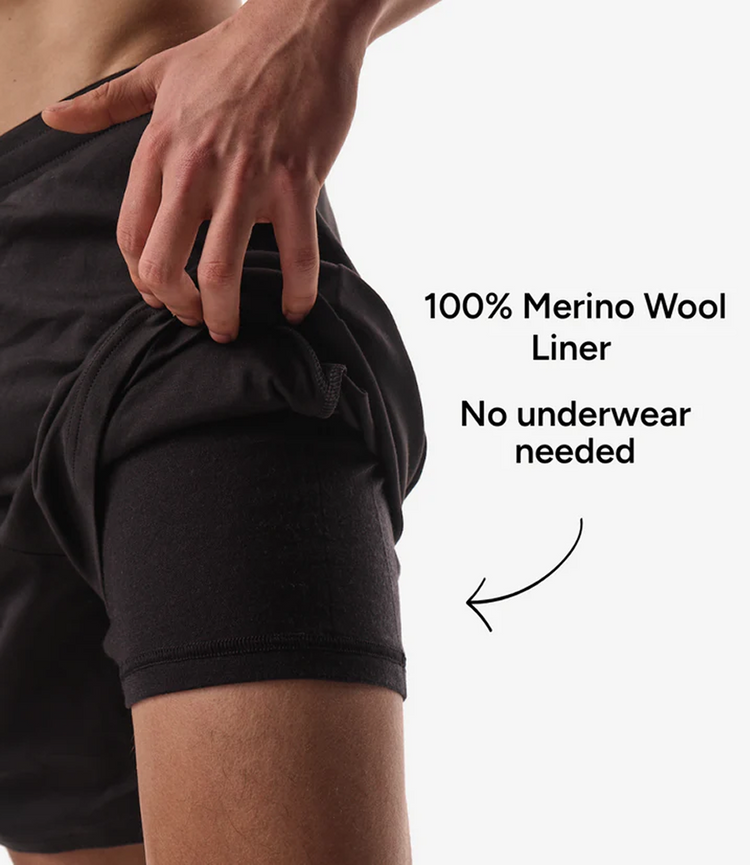
Two fabrics, two jobs. A 100% organic cotton shell handles the outside, breathable and built to age well. A 100% merino liner sits next to skin, where it regulates temperature and resists odour.
No nylon in the shell, the liner, the binding or the drawcord. The cord is cotton, because a synthetic one costs pennies less and almost every brand takes the pennies.
If you want the full breakdown, we wrote it up in alternatives to nylon in sportswear.
The short version
Nylon is petroleum spun into thread. It traps heat, it holds smell, it sheds microplastics, and it turns up in the liner and the waistband where nobody thinks to look.
It is not in your shorts because it is good. It is in your shorts because it is cheap and because the tag is small.