

Alternatives To Nylon In Sportswear
Most men checking a label for polyester walk straight past nylon.
Same story, different name. Nylon is polyamide, invented at DuPont in 1935, spun from petroleum, and it turns up in the parts of a garment nobody reads the tag for.

Where nylon actually hides.
The shell of most running shorts. The mesh liner inside them. The waistband. The pocket bags. The binding on a vest. The drawcord.
A pair of shorts can be sold on its main fabric and still be more than half plastic once you count everything touching you. Nylon makes that possible, because it is cheap, it takes a tight weave, and nobody markets it.
What the industry sells you as durability.
Nylon is marketed on abrasion resistance and tear strength. Look at what that means in a garment you sweat in.
Tough means dense and non-porous. It does not breathe, it does not absorb, and it holds heat against the skin. In a running short in July, that is the wrong property to build around.
Fast-drying means the same thing it means for polyester. The fibre refuses to take moisture in, so the sweat sits on your skin while the fabric dries around it.
Lightweight means thin plastic. It still sheds. A single 6 kg wash of synthetic clothing can release more than 700,000 microfibres, and later work found synthetics shed while you simply wear them.
Merino replaces the liner.
The nylon mesh liner in a running short exists to sit next to skin and dry fast. Merino does that job properly, absorbing moisture into the fibre and releasing it as vapour rather than pushing it back at you.
It resists odour naturally, which the mesh does not. That is the difference between a short you air overnight and one that needs washing after every session.
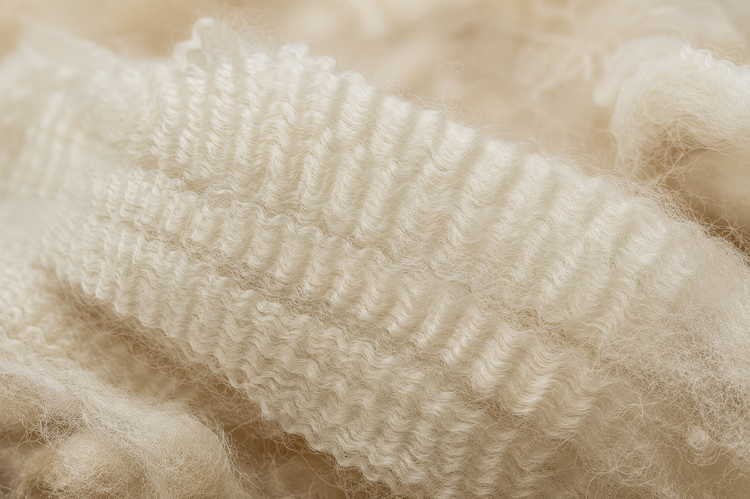
Ultra-fine merino sits well under the threshold at which wool feels prickly. A randomised clinical trial found superfine merino worn against the skin reduced eczema severity compared with cotton.
A garment is only as natural as the part of it touching your skin.
What replaces nylon, part by part.
The shell
Long-staple organic cotton, certified to GOTS from field to finished cloth. Breathable, hard-wearing, and it softens with every wash instead of pilling.
The liner
Merino wool, RWS certified. Regulates temperature in both directions and resists odour without a chemical treatment doing the work.
The drawcord
100% cotton. The detail nobody checks and almost every brand gets wrong, because a synthetic cord costs pennies less.
The lighter layers
Tencel lyocell, spun from wood pulp in a closed loop recovering over 99.8% of its solvent. Smooth against skin where wool alone would run warm.
Check the parts nobody advertises.
Brands lead with the main fabric because that is the number that flatters them. The liner, the waistband, the binding and the cord get listed in small print or not at all. Those are the parts held against your skin for the entire session.
If they will not tell you what the liner is made of, you already know.

Built without a gram of it.
Nero shorts use a 100% GOTS organic cotton shell, a 100% merino wool liner and a 100% cotton drawcord. No nylon in the shell, the liner, the binding or the cord.
Every fibre is traceable, from the pasture it grew on to the garment you wear.
The short version
Nylon is polyester's quieter twin. Same petroleum origin, same refusal to absorb, same shedding, and it turns up in the liner and the waistband where nobody thinks to look.
Organic cotton replaces the shell. Merino replaces the liner. Tencel handles the lighter layers. Read the small print, not the headline.